Amazon Halts Four Data Centers, Converting 122-Acre Virginia Site to Residential and Mixed-Use
Following intense local opposition, Amazon will abandon its plan to build four data centers in Loudoun County, instead repurposing the land for housing and public facilities.
By Ji-eun Choi ·
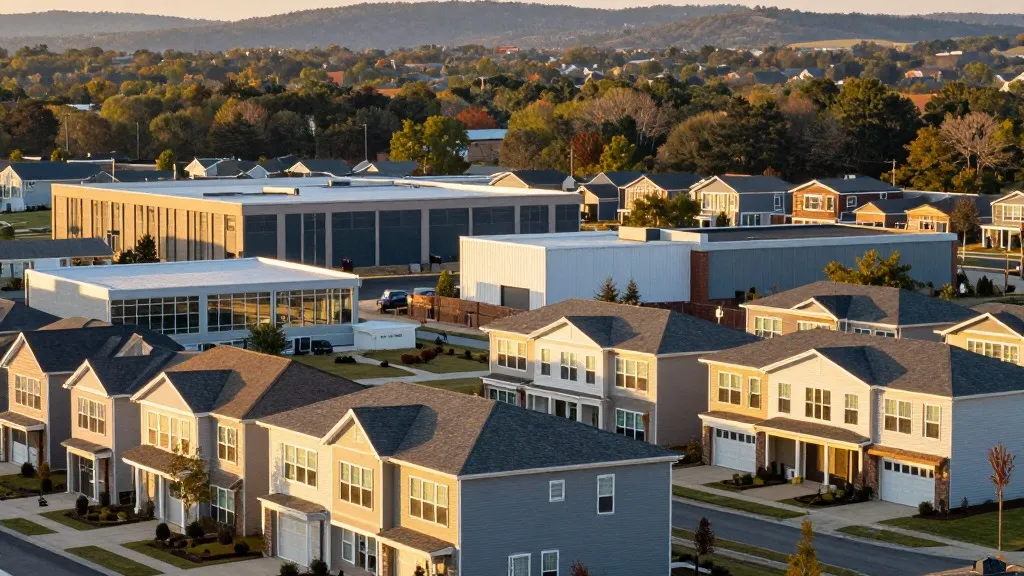
Amazon has officially scrapped plans to construct four new data center facilities on a 122-acre parcel in Loudoun County, Virginia. In a significant shift from its initial proposal, the tech giant will repurpose the majority of the former George Washington University campus for mixed-use and residential development. This decision marks a major retreat for the company in a region already saturated with digital infrastructure, as it seeks to resolve tensions with local stakeholders over the environmental and logistical impacts of its expansion.
The path to this compromise began when Amazon first submitted its proposal to build the new facilities in July 2026. By September, the company engaged in direct discussions with local leadership, specifically meeting with Phyllis J. Randall, the chair of the Loudoun County Board of Supervisors. During these talks, officials conveyed that an alternative use for the land might be more beneficial to the community. This dialogue ultimately led to the current agreement, avoiding what Amazon described as potentially costly litigation over the property's development potential.
Under the new terms, Amazon will donate 25 acres of the property to the county. This land is designated for the construction of a community arts center and a new recreational facility, addressing long-standing local requests for public amenities. Additionally, the company will contribute $5 million to the county’s housing fund, aiming to support the development of more attainable homes for working families. These concessions reflect a broader trend in Northern Virginia, where residents have grown increasingly wary of the noise, water usage, and electricity demands associated with massive data center operations.
Josh Weissman, Amazon’s vice president of data center development, explained that while the company had eagerly pursued the opportunity to purchase the former university campus, it carefully weighed the county’s specific concerns. Weissman noted that although Amazon viewed the legal development potential of the site differently than the county did, it concluded that a shared vision was the best outcome for all parties involved. This approach allowed the company to maintain a positive relationship with local officials while pivoting its strategy for the property.
The decision arrives at a critical time for the region, which is often referred to as "Data Center Alley" due to its high concentration of such facilities. The rapid expansion of artificial intelligence has driven a surge in demand for larger and more powerful computing facilities, intensifying scrutiny from local communities. In the days preceding this announcement, President Donald Trump called on data center builders and AI hyperscalers to pay local communities a dividend to offset energy-related price increases. He also proposed that these facilities should be required to generate their own electricity and sell excess power back to the local grid, highlighting the growing political focus on the sector's energy footprint.
Loudoun County officials emphasized the success of their collaborative approach in a public statement. Randall praised the outcome, stating that by choosing dialogue over reflexive disagreement, the county and Amazon created a valuable opportunity. She highlighted that the agreement provides new spaces for residents to gather and play, while most importantly, facilitating the creation of more attainable housing for working families in the area.
This development underscores the evolving relationship between major technology firms and the communities hosting their infrastructure. As the demand for cloud-based services and AI processing continues to grow, local governments are increasingly leveraging their negotiating power to secure tangible benefits for residents. Amazon’s pivot in Loudoun County serves as a notable example of how community backlash can reshape corporate land-use strategies in one of the most technologically dense regions in the United States.
Source: Tom's Hardware